
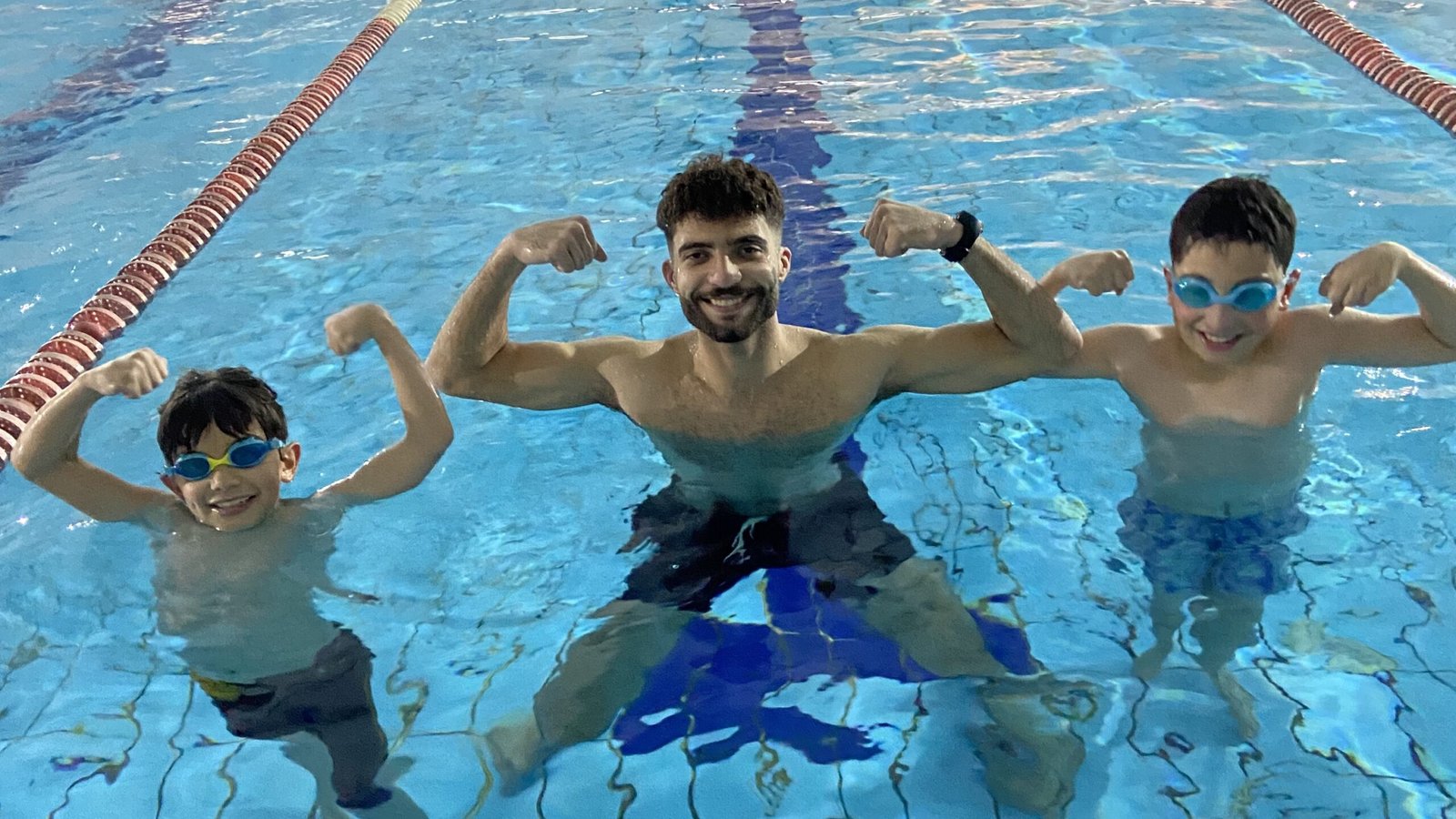
Introduction – More Than Just Learning How to Swim
When parents enroll their children in swimming lessons, the initial goal is usually simple:
learn how to swim safely.
But swimming, when introduced and coached correctly at a young age, becomes far more than a survival skill. It is one of the few sports that simultaneously develops the body, the brain, and essential life habits, all while placing minimal stress on growing joints.
At Liquid Lane, we don’t view youth swimming as early performance training. We see it as long-term human development, where physical literacy and mental discipline grow together.
Physical Development – Building the Foundation, Not Just Strength
Childhood is the most critical period for developing movement intelligence. Swimming supports this better than almost any other sport.
From an early age, swimming:
- Develops full-body coordination
- Encourages symmetrical muscle engagement
- Improves posture and spinal alignment
- Enhances lung capacity and breathing control
- Builds joint mobility without impact stress
Unlike land sports that often emphasize one dominant movement pattern, swimming forces children to move through multiple planes of motion. This builds balanced strength, reduces the risk of overuse injuries later in life, and prepares the body for any future sport.
Most importantly, swimming teaches children how to control their bodies in an unfamiliar environment , water , accelerating neuromuscular development and body awareness.
Mental Growth – Focus, Confidence, and Emotional Control
Swimming demands attention. There are no shortcuts in the water.
Young swimmers quickly learn:
- How to listen carefully to instructions
- How to focus for extended periods
- How to regulate breathing under effort
- How to stay calm when challenged
These skills transfer directly into daily life.
A child who learns to stay relaxed while holding their breath, coordinating strokes, and completing a set is also learning how to manage stress, frustration, and uncertainty , quietly and consistently.
Unlike many fast-paced team sports, swimming offers children space to think, feel, and adapt without constant external stimulation.
Discipline and Patience – Traits Built Through Repetition
Progress in swimming is gradual. This is one of its greatest strengths.
Children learn early that:
- Improvement takes time
- Effort must be consistent
- Results don’t come instantly
- Small technical details matter
These lessons build patience , a trait that is increasingly rare and incredibly valuable.
Over time, swimmers begin to associate progress with process, not shortcuts. This mindset stays with them long after they leave the pool.
Independence Without Isolation
Although swimming is an individual sport, young swimmers train within a group environment. This balance is powerful.
Children learn to:
- Take responsibility for their own performance
- Respect shared space and structure
- Support teammates without direct competition
- Measure success internally, not comparatively
This combination fosters independence while maintaining social awareness , a rare and healthy dynamic in youth sports.
Long-Term Benefits Beyond Competitive Swimming
Not every child will become a competitive swimmer , and that’s perfectly fine.
What swimming offers regardless of competitive outcome:
- Strong cardiovascular health
- Lifelong confidence in water
- A disciplined relationship with training
- Improved posture and breathing habits
- Mental resilience built early
Many of these benefits cannot be easily taught later in life. They are embedded, not learned.
The Role of Coaching in Early Years
The quality of early coaching matters more than intensity.
Effective youth coaching prioritizes:
- Proper movement patterns over speed
- Confidence over pressure
- Consistency over volume
- Enjoyment without chaos
When children feel safe, understood, and supported, learning accelerates naturally.
Final Thoughts – Investing Early, Building for Life
Swimming at a young age is not about creating champions , it’s about creating capable, confident, and disciplined individuals.
The water teaches patience. The structure teaches discipline. The process teaches resilience.
When introduced with care and intention, swimming becomes one of the most valuable investments a parent can make in their child’s physical and mental development , with benefits that last far beyond childhood.